

KitchenAid Stand Mixer or Bosch Universal Plus? For heavy dough?

If you regularly make bread, pizza, bagels, or other dough-heavy recipes, the Bosch Universal Plus is often the better choice for handling large batches and frequent bread-making. The KitchenAid stand mixer is a strong alternative for home bakers who want one machine for mixing, whipping, and everyday cooking. Your ideal choice depends on batch size, dough consistency, baking frequency, and the attachments you need.
KitchenAid vs. Bosch Universal Plus at a Glance
Both mixers can knead bread dough, but they use different designs. KitchenAid uses a fixed bowl with a rotating dough hook, while the Bosch Universal Plus uses a bottom-drive system with a rotating bowl. For frequent, large-batch bread baking, Bosch has a practical advantage. KitchenAid offers more flexibility for people who also make cakes, cookies, frostings, and other everyday recipes.
| Feature | KitchenAid Stand Mixer | Bosch Universal Plus |
|---|---|---|
| Best for | All-around baking and cooking | Frequent bread baking and large dough batches |
| Mixing design | Fixed bowl, rotating attachment | Bottom-drive motor, rotating bowl |
| Bowl | Varies by model; 5.5-quart and 7-quart options are available | 6.5-quart bowl |
| Dough tool | C-shaped or spiral dough hook, depending on model | Dedicated dough hook and extender |
| Speed settings | Depends on model; some current bowl-lift models offer 11 speeds | 4 speeds plus pulse |
| Whipping and cake mixing | Excellent versatility | Capable, with model-specific accessories |
| Additional attachments | Broad range of optional attachments | Optional accessories for other kitchen tasks |
| Best overall use | Mixed baking needs | Dough-focused baking |
| Available |  | |
Specifications and included accessories vary by model and bundle.
Why the Bosch Universal Plus Is Better for Heavy Dough
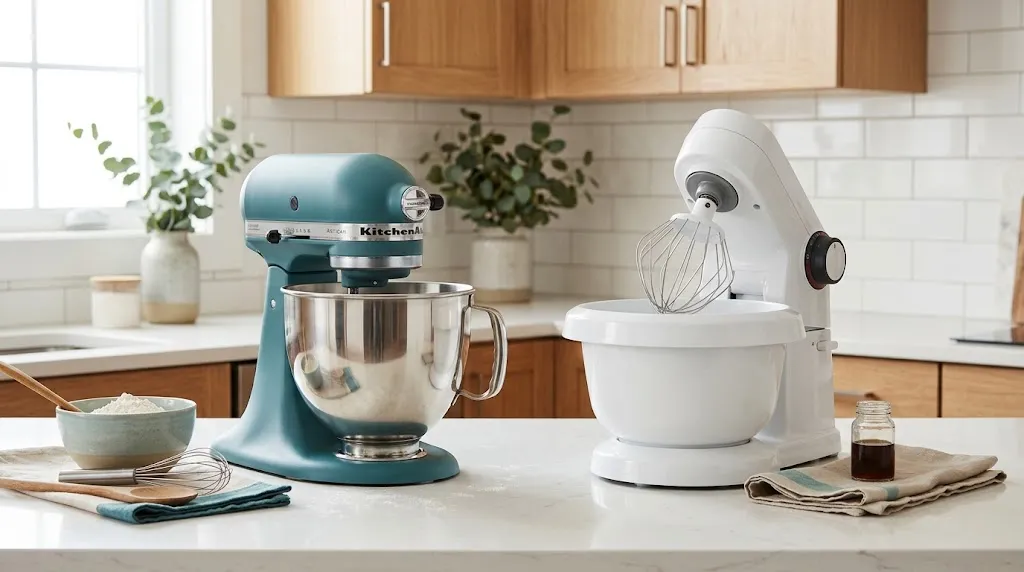
The Bosch Universal Plus is designed with bread baking in mind. Its motor sits below the bowl, leaving the top open for adding ingredients and checking the dough as it mixes. This layout is useful when working with large batches or dough that becomes difficult to handle as it develops.
1. Better suited to large batches
The Bosch Universal Plus has a 6.5-quart bowl, and the manufacturer advertises a capacity of up to 15 pounds of dough. Actual capacity depends on the recipe and dough type, so you should not assume every heavy dough recipe can use the maximum amount.
This larger working capacity is useful for people who bake multiple loaves in one session.
For example, if you prepare several loaves of sandwich bread every weekend, the Bosch’s dough-focused design and large bowl make it a compelling option.
2. A dough hook designed for kneading
The Bosch comes with a dedicated dough hook and an extender for handling smaller batches. The hook works by stretching and folding dough as the bowl rotates, helping develop the gluten structure needed for bread.
This design can be especially convenient for whole-wheat bread, pizza dough, and other recipes that need sustained kneading. However, dough hydration, flour type, and batch size still affect how well the mixer performs.
3. Easy access while mixing
Because the motor sits beneath the bowl, the Bosch has an open working area above the dough. You can see the mixture and add ingredients without working around a mixer head.
Its suction feet also help keep the unit in place on a suitable countertop during mixing.
4. Trade-offs to consider
The Bosch is not automatically the best choice for every kitchen.
- Its open-bowl design is different from the familiar enclosed mixing bowl of a traditional stand mixer.
- It has fewer speed settings than many KitchenAid models.
- The standard bowl is plastic, although compatible stainless steel bowls are available.
- Its dough-focused design may be less appealing if your main tasks are cake batter, frosting, and frequent attachment changes.
If you mainly bake bread, these trade-offs may be acceptable. If you want a versatile mixer for many different recipes, KitchenAid deserves a closer look.
When KitchenAid Is the Better Choice
KitchenAid is a strong choice for home bakers who make bread but do not want a mixer dedicated mainly to dough. Its bowl-lift models provide a stable platform for larger batches, while the brand’s wider attachment selection supports many other kitchen tasks.
1. You bake more than bread
A KitchenAid can mix cookie dough, beat cake batter, whip cream, prepare frosting, and knead yeast dough using the appropriate attachment.
If you alternate between making birthday cakes, cookies, pizza, and homemade bread, one mixer can handle much of your baking routine.
For example, someone who makes pizza dough on Friday and cupcakes on Saturday may value KitchenAid’s versatility more than Bosch’s bread-focused design.
2. The right KitchenAid model matters
Not all KitchenAid stand mixers are equally suited to heavy dough.
The smaller tilt-head models are convenient for everyday baking, but frequent heavy-dough work makes a larger bowl-lift model worth considering. Some large-capacity bowl-lift models include a spiral dough hook, which kneads dough differently from the C-shaped hook supplied with many tilt-head mixers.
The 5.5-quart bowl-lift model, for example, is advertised for kneading more than 7 pounds of bread. That is a model-specific manufacturer claim, not a universal capacity for every KitchenAid mixer.
If bread is your priority, compare the exact model and its dough guidance rather than buying solely on bowl size or advertised motor power.
3. More control for different mixing tasks
KitchenAid’s range of speed settings helps with different tasks, from gentle ingredient incorporation to whipping. The manufacturer recommends Speed 2 for kneading bread dough with the dough hook and warns against using higher speeds for yeast dough.
That guidance matters because a mixer should be operated according to its model-specific instructions, especially when working with dense dough.
4. Easier to fit into a mixed-use kitchen
A KitchenAid may make more sense if you want one familiar appliance for several baking jobs. Its optional attachments can also expand its uses beyond mixing, although additional accessories can add to the total cost.
The main drawback is that a smaller or less suitable model may become limiting if you regularly knead large amounts of stiff dough.
Which Mixer Handles Different Types of Heavy Dough Better?
The best choice depends on what you bake, how often you bake it, and how much dough you prepare at once.
| Dough type | Better starting choice | Why |
|---|---|---|
| Large batches of sandwich bread | Bosch Universal Plus | Large bowl and dough-focused design |
| Frequent whole-wheat bread | Bosch Universal Plus | Designed for substantial bread-making workloads |
| Pizza dough for family meals | Either | Batch size and model selection matter |
| Small batches of bread | Either | Both can knead bread when used within their limits |
| Bagel dough | Bosch is worth considering | Dense dough benefits from a suitable dough-focused machine, but recipe limits matter |
| Bread plus cakes and cookies | KitchenAid bowl-lift | Better fit for a varied baking routine |
| Occasional homemade bread | KitchenAid or Bosch | Other needs, price, and available space may decide the purchase |
These are practical buying recommendations, not results from a standardized head-to-head performance test. Neither bowl size nor motor wattage alone proves that one mixer will outperform the other with every recipe.
What About Motor Power, Durability, and Overheating?
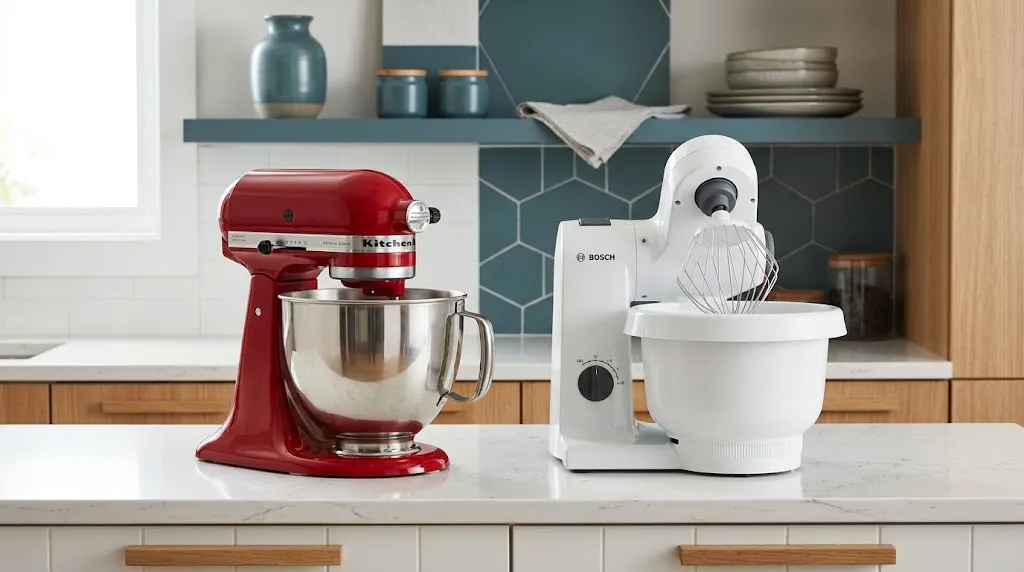
Motor wattage is often used to compare stand mixers, but it does not tell the whole story. Drive design, gearing, dough-hook shape, batch size, and operating limits all affect how a mixer handles resistance.
The Bosch Universal Plus is marketed with a 500-watt motor rating in US listings, while KitchenAid’s published specifications vary by model. Comparing wattage alone is not enough to declare a winner.
To get reliable results from either machine:
- Follow the manufacturer’s maximum dough or flour limits for your exact model.
- Use the recommended kneading speed.
- Avoid running stiff dough for longer than the manual allows.
- Stop the mixer if it shows signs of strain, unusual noise, or overheating.
- Allow the machine to cool as directed before resuming use.
For example, a large batch of low-hydration bagel dough places different demands on a mixer than a soft, high-hydration pizza dough. Even if both recipes use the same amount of flour, they may not be equally demanding.
Durability also depends on how the machine is used and maintained. A mixer regularly pushed beyond its recommended capacity may wear differently from one used within its intended limits.
Which Offers Better Value for Money?
The better value depends on whether you are paying for dough capacity alone or for a broader set of kitchen functions.
Bosch may offer better value for a household that bakes several loaves at once and wants a machine focused on kneading. KitchenAid may provide better value for someone who will also use the mixer regularly for cakes, cookies, whipped cream, and other recipes.
Before purchasing, compare the current price of the exact models, included accessories, warranty terms, and the cost of any extras you need. Prices and bundles change, so a fair comparison should use the offers available when you are ready to buy.
Also consider storage. The Bosch’s lower-profile design may appeal to someone who wants a different countertop setup, while KitchenAid’s bowl-lift models are heavier and often best kept in a permanent location. Check the dimensions and weight of the exact model before deciding.
Frequently Asked Questions
If you are still deciding between these mixers, the following answers address three common concerns about using a stand mixer for demanding bread recipes.
Is the Bosch Universal Plus better than KitchenAid for sourdough?
The Bosch Universal Plus is a strong option for frequent sourdough baking, especially when you make larger batches. A suitable KitchenAid bowl-lift model can also knead sourdough, so the right choice depends on dough quantity, consistency, and how often you bake.
Can a KitchenAid stand mixer handle stiff bagel dough?
Yes, an appropriately sized KitchenAid can knead bagel dough when the recipe and batch stay within the model’s limits. Choose a suitable bowl-lift model if you regularly make dense dough, and follow the manufacturer’s speed and kneading-time instructions.
Should I buy Bosch or KitchenAid if I bake bread every week?
Choose Bosch if bread-making and large dough batches are your main priorities. Choose KitchenAid if you also need a versatile mixer for cakes, cookies, frostings, and other everyday recipes.
Final Verdict
For frequent bread baking and large batches of dense dough, the Bosch Universal Plus is the better overall choice. Its bottom-drive layout, open bowl, and dough-focused design make it especially appealing to people who bake several loaves at a time.
The KitchenAid remains the better fit for a mixed-use kitchen, particularly when you choose a suitable bowl-lift model with a spiral dough hook. It can handle bread while offering flexibility for many other recipes.