Ecobee Premium or Honeywell T9? For remote room sensors?

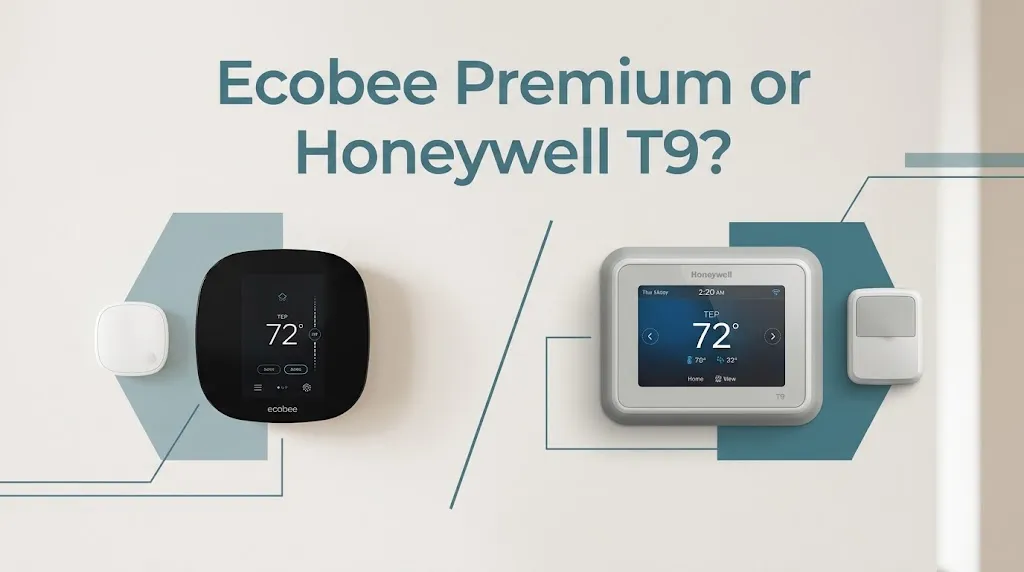
The Ecobee Smart Thermostat Premium is the better choice if you want remote room sensors as part of a broader smart-home system, with occupancy detection, humidity monitoring, and extra comfort features. The Honeywell Home T9 is a strong alternative for homeowners who mainly want to prioritize occupied rooms and balance temperatures throughout the house without paying for as many additional features.
How Ecobee Premium and Honeywell T9 Remote Sensors Compare
Remote room sensors help a smart thermostat measure temperatures in rooms away from the main thermostat. This is useful when a bedroom feels warmer than the hallway or a home office gets too cold while the rest of the house feels comfortable.
Both thermostats support multi-room sensing, occupancy-based comfort adjustments, and scheduling. The main difference is how they fit into your overall home setup and which extra features you want.
| Feature | Ecobee Smart Thermostat Premium | Honeywell Home T9 |
|---|---|---|
| Included remote sensor | One SmartSensor | One Smart Room Sensor in the standard bundle |
| Room temperature sensing | Yes | Yes |
| Occupancy detection | Yes, with supported sensors | Yes, using motion detection |
| Humidity monitoring | Built into the thermostat; sensor features vary | Remote sensors report temperature and humidity |
| Room prioritization | Uses occupancy and comfort settings | Prioritizes selected rooms and occupied spaces |
| Scheduling | Smart scheduling and comfort settings | Flexible seven-day scheduling |
| Smart-home integration | Apple Home, Alexa, Google Assistant, SmartThings | Apple HomeKit, Alexa, Google Assistant, and others |
| Additional features | Air-quality monitoring, built-in Alexa, security features | Focused on temperature control and room sensing |
| Product availability | Current product lineup | Discontinued in the US; remaining stock may be available |
| Available |  | |
Why Ecobee Premium Is Better for Feature-Rich Room Sensing
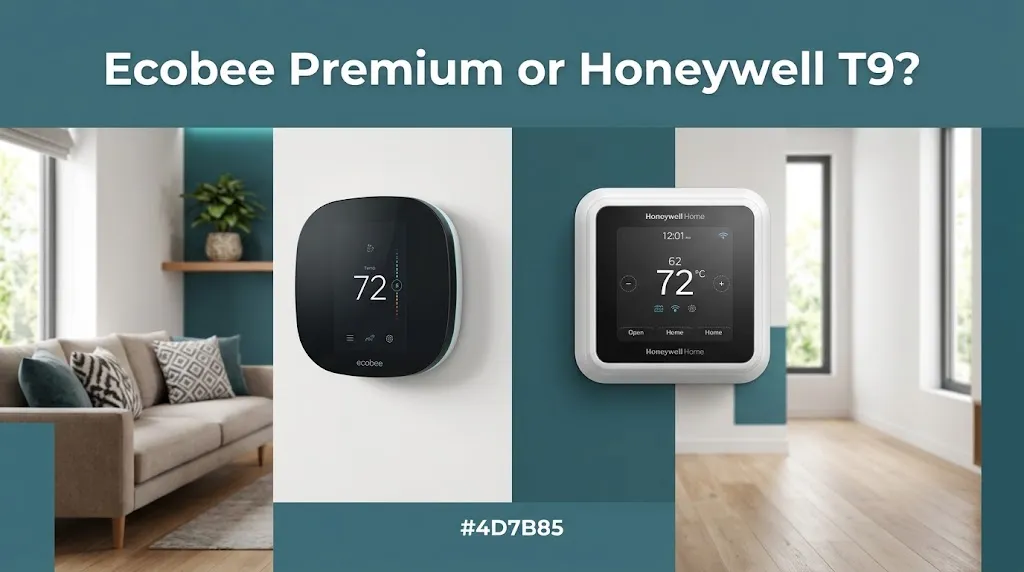
The Ecobee Smart Thermostat Premium combines remote room sensing with a wider range of home comfort features. Its included SmartSensor measures temperature and detects occupancy, helping the thermostat focus on rooms that matter most to your household.
Room comfort and occupancy detection
The sensor can help the system prioritize a bedroom at night or a living room during the day. Instead of relying only on the temperature near the wall-mounted thermostat, Ecobee can use readings from the rooms you select.
For example, imagine that your upstairs bedroom stays warm while the downstairs hallway reaches the desired temperature. Placing a SmartSensor in the bedroom gives the thermostat another reading to use when managing heating or cooling.
Keep in mind that a remote sensor does not create a separate heating or cooling zone. The central HVAC system still controls the home’s connected equipment, so one room may remain warmer or cooler than another.
More than temperature monitoring
Ecobee Premium also includes features that go beyond remote sensing:
- Built-in indoor air-quality monitoring.
- Built-in Alexa voice control.
- Compatibility with Apple Home and other supported smart-home platforms.
- Support for certain HVAC accessories, such as compatible humidifiers and dehumidifiers.
- Support for additional compatible SmartSensors.
These features make Ecobee a sensible option if you want to improve comfort while also building a broader smart-home setup.
What to know before buying
Ecobee Premium has a higher feature set and a listed price of around $259.99, although prices can change. You should also confirm HVAC compatibility and the number of extra sensors you need before calculating the total cost.
Why Honeywell T9 Is a Strong Alternative
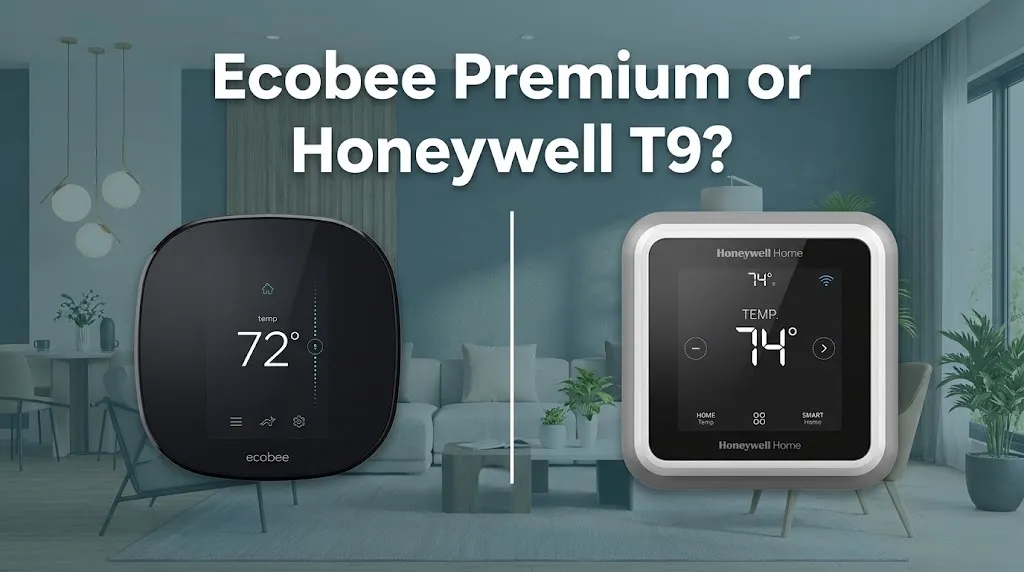
The Honeywell Home T9 focuses on helping you manage comfort across multiple rooms. Its Smart Room Sensors report temperature and humidity, and motion detection helps the thermostat prioritize rooms that are in use. You can set schedules to favor living spaces during the day and bedrooms at night.
Room prioritization for everyday use
The T9 is particularly appealing if your main problem is uneven temperatures rather than a need for additional smart-home features.
Consider a home where the living room is comfortable during the day, but bedrooms become too warm at night. You can configure the thermostat to prioritize the bedrooms during sleeping hours and use different room priorities during the day.
This makes remote sensing useful without requiring you to keep changing the temperature manually.
Temperature and humidity readings
The T9’s remote sensors provide temperature and humidity readings through the Resideo app. That extra humidity information can help explain why a room feels different even when its temperature seems similar to other rooms.
However, humidity readings alone do not mean the thermostat can independently control humidity in every room. Its actual control options depend on the HVAC equipment and system configuration.
The main drawback: availability
Honeywell Home has discontinued the T9 in the US. Some retailers may still have remaining stock, but you should check the exact model, warranty, and sensor availability before purchasing.
That matters if you plan to expand your system over time. A low initial price may be less attractive if compatible replacement sensors are difficult to find.
Which Thermostat Should You Choose for Your Home?
The right choice depends on what you want the sensors to accomplish.
Choose Ecobee Premium if:
- You want remote room sensors and more smart-home features.
- You want built-in air-quality monitoring and Alexa.
- You plan to expand your sensor setup over time.
- You prefer a thermostat with a broader feature set and an active product lineup.
Choose Honeywell T9 if:
- Your main priority is occupied-room temperature control.
- You value remote temperature and humidity readings.
- You already own a compatible T9 system.
- You can confirm that the thermostat and extra sensors are available at a reasonable price.
How Many Remote Room Sensors Do You Need?
You do not necessarily need a sensor in every room. Start with the spaces where temperature differences affect your comfort most.
- One or two bedrooms: Place sensors in the bedrooms that become uncomfortable at night.
- A home office: Add a sensor if you spend long periods working in a room that differs from the hallway temperature.
- A large, multi-level home: Consider sensors on different floors, especially where temperatures vary noticeably.
For example, a two-story home might benefit from one sensor upstairs and another in the main living area. A smaller home with consistent temperatures may need only the included sensor.
Place sensors away from direct sunlight, supply vents, exterior doors, and other sources of misleading temperature readings. Follow the manufacturer’s placement instructions for reliable results.
Do Remote Sensors Actually Fix Hot and Cold Rooms?
Remote sensors can improve how a thermostat responds to temperature differences, but they cannot fix every underlying HVAC problem.
If one bedroom is consistently hot, the cause could be poor airflow, inadequate insulation, duct problems, or sunlight entering through the windows. A sensor can help the thermostat recognize the room’s temperature, but it cannot repair those issues.
Before adding several sensors, check whether vents are blocked and whether the room receives adequate airflow. If the temperature difference remains large, consider having an HVAC professional inspect the system.
Frequently Asked Questions
Here are answers to three common questions about choosing between Ecobee Premium and Honeywell T9 for remote room sensing.
Does Ecobee Premium come with a remote room sensor?
Yes. Ecobee Smart Thermostat Premium includes one SmartSensor for room temperature and occupancy detection. You can add compatible sensors if you want to monitor more rooms.
Can Honeywell T9 use multiple room sensors?
Yes. The T9 supports multiple compatible Smart Room Sensors, allowing you to prioritize different rooms according to occupancy and schedules. However, check availability carefully because the T9 has been discontinued in the US.
Will remote sensors make every room the same temperature?
No. Remote sensors help the thermostat decide which room readings to prioritize, but they do not independently control separate rooms unless your home has the appropriate zoning equipment. Airflow, insulation, and the layout of your HVAC system still affect room temperatures.
Final Verdict
The Ecobee Smart Thermostat Premium is the overall winner for most buyers starting a new remote-sensor setup because it combines room sensing with broader smart-home features and remains part of Ecobee’s current product lineup.
The Honeywell Home T9 remains a capable option if you already own one or find a compatible system at a good price. Before buying either thermostat, verify HVAC compatibility and the availability of additional sensors. That simple check can help you avoid spending money on a system that does not fit your home’s needs.