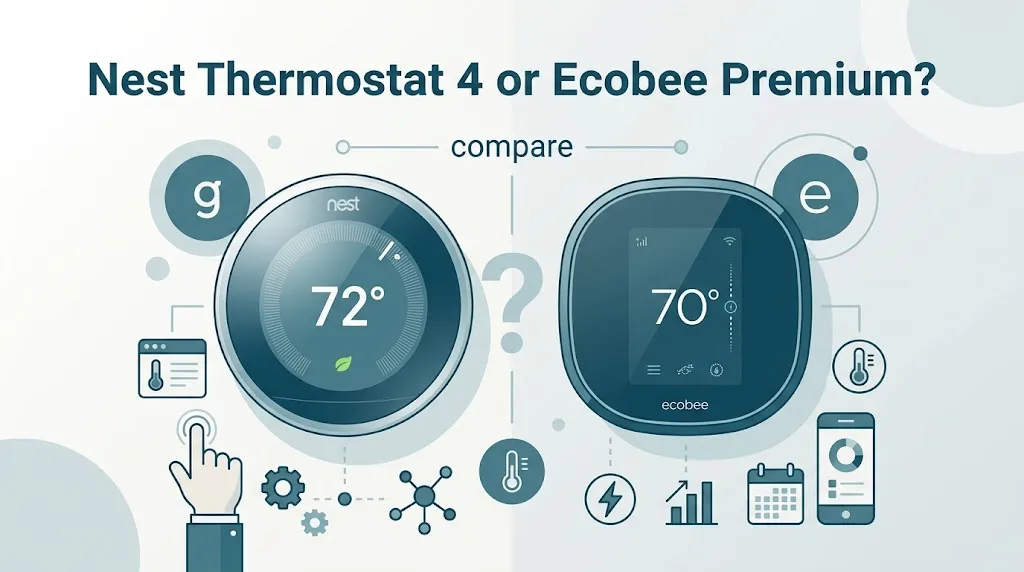
Nest Thermostat 4 or Ecobee Premium? For multi-zone HVAC?

Choosing between the Nest Learning Thermostat (4th gen) and Ecobee Smart Thermostat Premium for a multi-zone HVAC system depends on how your home controls temperature in different rooms. Ecobee Premium is generally the stronger choice for managing room-by-room comfort when paired with compatible SmartSensors, while Nest Thermostat 4 is a good option for homes that prioritize simple controls and Google Home integration. However, neither thermostat automatically replaces a properly designed multi-zone control system.
How Multi-Zone HVAC Systems Work
A multi-zone HVAC system divides a home into separate areas, or zones, so different parts of the house can have different temperature settings. For example, you might keep the upstairs bedrooms cooler at night while maintaining a comfortable temperature in the downstairs living room.
There are two common ways to create these zones.
- One HVAC system with motorized dampers: A central furnace or air conditioner sends air through different duct sections. A zone control panel and thermostats work together to manage those dampers.
- Multiple HVAC systems: Each floor or section of the house has its own heating and cooling equipment and thermostat.
Smart thermostats can work with some zoned systems, but compatibility depends on the equipment, wiring, and zone controller.
The key distinction is that a remote room sensor is not the same as an independent HVAC zone. A sensor measures conditions in a room; it does not necessarily give that room its own heating or cooling control.
Nest Learning Thermostat 4th Gen vs. Ecobee Premium: Key Differences
This comparison uses the Nest Learning Thermostat (4th gen), rather than the standard Nest Thermostat.
| Feature | Nest Learning Thermostat (4th gen) | Ecobee Smart Thermostat Premium |
|---|---|---|
| Primary strength | Smart scheduling and Google Home integration | Room comfort management with occupancy-aware sensors |
| Included room sensor | One Nest Temperature Sensor (2nd gen) | One SmartSensor |
| Additional sensors | Supports up to six Nest Temperature Sensors | Supports additional compatible SmartSensors |
| Room occupancy detection | Thermostat has presence-sensing features; temperature sensors focus on temperature | SmartSensors measure temperature and occupancy |
| Zoned HVAC support | Compatible with many zoned systems, subject to system requirements | Compatible with supported 24V systems and zone boards |
| Smart home integration | Google Home and Matter | Apple Home, Amazon Alexa, Google Assistant and SmartThings |
| Built-in air quality monitoring | No equivalent built-in air quality monitor | Yes |
| Power requirements | May work without a C wire; some installations need one | Uses a C wire or the included Power Extender Kit when appropriate |
| Warranty | Standard retail warranty of two years | Three-year limited warranty |
| Available |  | |
Features can vary with installation and connected equipment. Always confirm current specifications and compatibility before purchasing.
Which Thermostat Is Better for Multi-Zone HVAC?
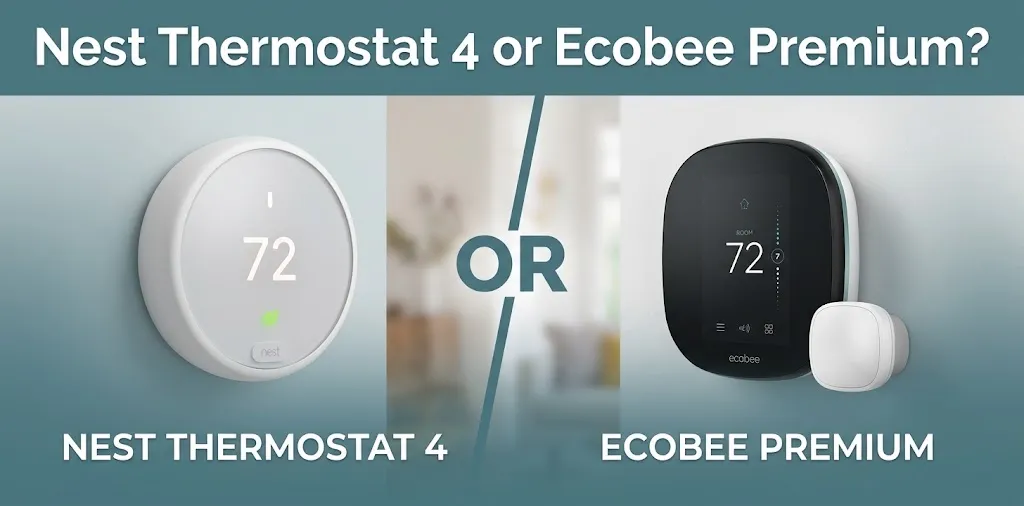
Ecobee Premium Is Better for Room-by-Room Comfort
Ecobee Premium has an advantage when your main concern is the temperature in specific rooms rather than the temperature near the thermostat.
Its included SmartSensor measures temperature and occupancy. You can place compatible sensors in bedrooms, a home office, or another room that tends to become too hot or cold. The thermostat can use those readings in its comfort settings to help prioritize occupied rooms.
Consider a hypothetical two-story home where the upstairs bedrooms become warm at night while the downstairs hallway stays cool. A thermostat in the hallway might reach its target temperature before the bedrooms feel comfortable.
An Ecobee SmartSensor in a bedroom can help the system account for that room’s conditions. However, if all rooms share one HVAC zone, the thermostat still cannot independently cool only that bedroom without suitable zoning equipment.
Ecobee is especially appealing if you want:
- Temperature readings from rooms where your family spends the most time.
- Occupancy-aware comfort settings.
- Flexible schedules for daytime, evening, and overnight use.
- Integration with Apple Home, Google Assistant, or Alexa.
Nest Learning Thermostat 4th Gen Is Better for Google-Centered Homes
Nest is a strong alternative if you prefer Google’s smart home platform and want a thermostat that adapts to your schedule.
The fourth-generation Learning Thermostat includes a Nest Temperature Sensor (2nd gen). It supports up to six Nest Temperature Sensors, helping you account for temperature differences between rooms. It also offers Smart Schedule features and energy-saving suggestions.
Imagine a home with a finished basement that stays cooler than the main floor. A sensor in the basement can give the thermostat additional temperature information, helping you manage comfort more effectively.
However, the sensor does not create a separate heating and cooling zone. The actual results depend on the HVAC system and how the thermostat uses the sensor readings.
Nest makes sense if you want:
- Google Home and Matter integration.
- Automatic schedule adjustments.
- Temperature monitoring in different rooms.
- A streamlined thermostat interface.
- Compatibility with a supported multistage or zoned HVAC setup.
Which Is Better for a House With Separate Thermostats?
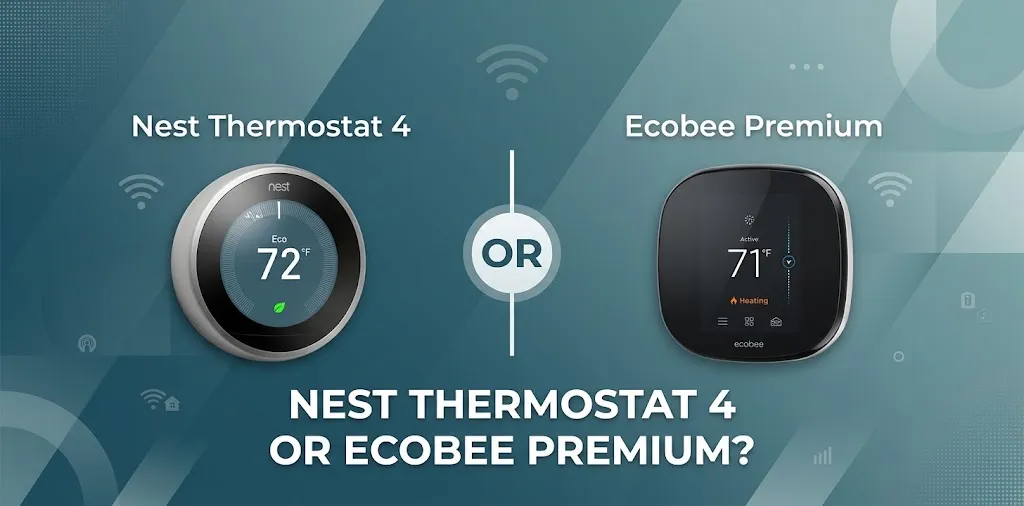
If your home already has two or more thermostats, each controlling a different zone, either product may be suitable. The important question is whether each thermostat is compatible with its corresponding HVAC equipment and zone controller.
For example, if your upstairs and downstairs have separate thermostats connected to a compatible zone panel, you could use supported smart thermostats in those locations. You would need to verify the controller’s requirements before replacing the existing thermostats.
Ecobee supports certain zone boards, while Nest works with many compatible zoned systems. However, some configurations have wiring or damper-control limitations.
For complex installations, ask an HVAC professional to check the zone panel and wiring before buying.
Smart Sensors vs. True HVAC Zoning
One of the biggest mistakes homeowners make is assuming that buying extra sensors will allow independent temperature control in every room.
These technologies serve different purposes.
| Capability | Smart Room Sensors | Independent HVAC Zones |
|---|---|---|
| Measure room temperature | Yes | Depends on the equipment installed |
| Detect room occupancy | Depends on the sensor | Not necessarily |
| Help prioritize comfort in selected rooms | Yes, with supported settings | Yes, through zone controls |
| Control heating and cooling independently in each room | No, not by themselves | Possible when the system is designed for it |
| Require compatible control equipment | Yes | Yes, including appropriate zone controls |
If you have a single HVAC system with dampers, a smart thermostat must work with the existing zone panel. If you have separate HVAC units, each thermostat must be compatible with the unit it controls.
If you want individual bedroom temperature control, ask an HVAC contractor whether your existing system can support additional zones. A thermostat upgrade alone may not solve the problem.
Installation and Compatibility Considerations
Before choosing either thermostat, check the equipment behind your current wall thermostat.
1. Identify Your HVAC System
Find out whether you have a conventional furnace and air conditioner, a heat pump, a boiler, or another system. Also determine whether your home uses one central system with dampers or multiple independent systems.
Nest and Ecobee support many common 24-volt systems, but their wiring requirements and supported equipment differ. Use each manufacturer’s official compatibility checker before purchasing.
2. Check the Zone Controller
If multiple thermostats control one HVAC unit, identify the zone control panel’s manufacturer and model.
Some controllers work with standard thermostat signals, while others use proprietary wiring or special damper-control requirements. Do not assume that a thermostat is compatible simply because it supports the same heating and cooling system type.
3. Verify the Wiring and Power Supply
The C wire supplies continuous power to a thermostat. Nest Learning Thermostat (4th gen) can operate without one in many installations, although some systems require a C wire or Nest Power Connector.
Ecobee Premium uses a C wire or, in supported installations, the included Power Extender Kit. The presence of a C wire does not guarantee that every other part of the installation is compatible.
4. Check Additional HVAC Equipment
If your system includes a whole-home humidifier, dehumidifier, ventilator, or multistage heat pump, verify that the selected thermostat supports the equipment and the required wiring.
For complex zoned systems, professional installation can help prevent control problems, unexpected heating or cooling behavior, and equipment compatibility issues.
Cost and Long-Term Value
The purchase price is only one part of the total cost of upgrading a multi-zone HVAC system.
Consider these expenses before making a decision:
- Thermostat price: Compare current retail prices and included accessories.
- Additional sensors: You may want sensors for bedrooms, offices, or other rooms.
- Installation: Professional labor may be needed for complex wiring or zone panels.
- System modifications: Adding independent zones may require dampers, control equipment, wiring, or other HVAC work.
- Energy savings: Results depend on your climate, insulation, HVAC equipment, schedules, and how you use the system.
Ecobee Premium includes one SmartSensor, while Nest Learning Thermostat (4th gen) includes one Nest Temperature Sensor (2nd gen). Both let you expand room-temperature monitoring with compatible accessories.
Do not assume that buying more sensors will automatically reduce your energy bill. The benefit depends on how the system responds to the readings and whether the temperature settings suit your household.
Frequently Asked Questions
Here are three common questions homeowners should consider before choosing between Nest and Ecobee for multi-zone HVAC systems.
Is Ecobee Premium Better Than Nest for Multiple HVAC Zones?
Ecobee Premium is a strong choice for room-level comfort because its SmartSensors measure both temperature and occupancy. Nest Learning Thermostat (4th gen) is also compatible with many zoned systems, so the best choice depends on your zone controller, wiring, and smart home preferences.
Can Nest Learning Thermostat 4th Gen Control Different Temperatures in Every Room?
Not by itself. Its temperature sensors help it account for conditions in different rooms, but independent heating and cooling require suitable HVAC zoning equipment or separate systems.
Can I Replace All My Existing Zone Thermostats With Ecobee Premium?
Possibly, provided each thermostat is compatible with the HVAC equipment and zone controller it operates. Check the wiring and controller specifications first, especially if your system uses proprietary controls or specialized dampers.
Final Verdict
Ecobee Smart Thermostat Premium is the better overall choice for homeowners who want sensor-based room comfort and occupancy-aware temperature management. Nest Learning Thermostat (4th gen) is the better fit for households that prefer Google’s smart home ecosystem, adaptive scheduling, and Nest’s temperature-sensor system.
For a genuine multi-zone installation, however, the zone controller and HVAC compatibility matter more than the brand name. Before buying either thermostat, identify your existing zone panel and confirm that the replacement will work with it. That simple check can save you the cost and frustration of purchasing a thermostat that does not fit your system.