Levoit Core 400S or Dyson Purifier Cool? For allergy relief?

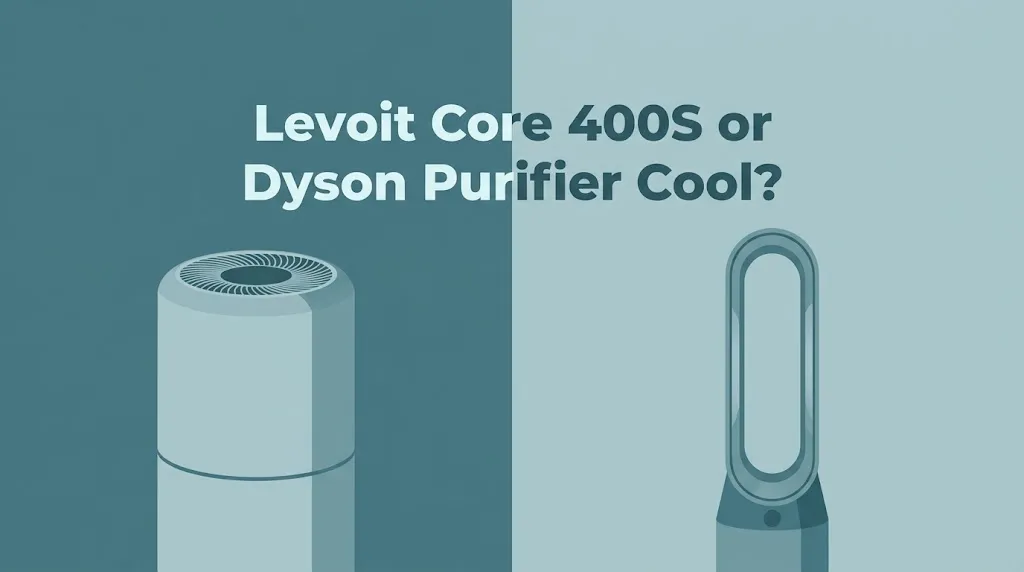
If your main goal is allergy relief, the Levoit Core 400S is the better choice for most people who want to clean the air in a bedroom or living room without spending too much. The Dyson Purifier Cool offers additional features, including a fan function and air-quality monitoring, but the best option depends on room size, filter performance, noise, and your specific allergy triggers.
Levoit Core 400S vs. Dyson Purifier Cool: At a Glance
Both air purifiers can help reduce airborne allergens, including pollen, dust, and pet dander. The main difference is value: the Levoit focuses on air cleaning at a lower purchase price, while the Dyson combines filtration with cooling airflow and more detailed air-quality monitoring.
| Feature | Levoit Core 400S | Dyson Purifier Cool |
|---|---|---|
| Main purpose | Air purification | Air purification and fan |
| Particle filtration | Three-stage filter | Sealed HEPA H13 filtration on supported models |
| Activated carbon | Yes | Yes |
| Air-quality monitoring | Sensor and app | Sensors, display, and app on supported models |
| Smart controls | VeSync app, Alexa, Google Assistant | MyDyson app on supported models |
| Cooling airflow | No dedicated cooling fan function | Yes |
| Published CADR | 231 CFM | Varies by model; directly comparable CADR data may not be available |
| Purchase price | Generally lower | Generally higher |
| Best for | Budget-conscious allergy management | Allergy management plus fan functionality |
| Available |  | |
One important detail: Dyson sells multiple Purifier Cool versions, including the TP07, TP10, and PC1. Their features and prices can differ, so confirm the exact model before buying.
Which Air Purifier Is Better for Allergies?
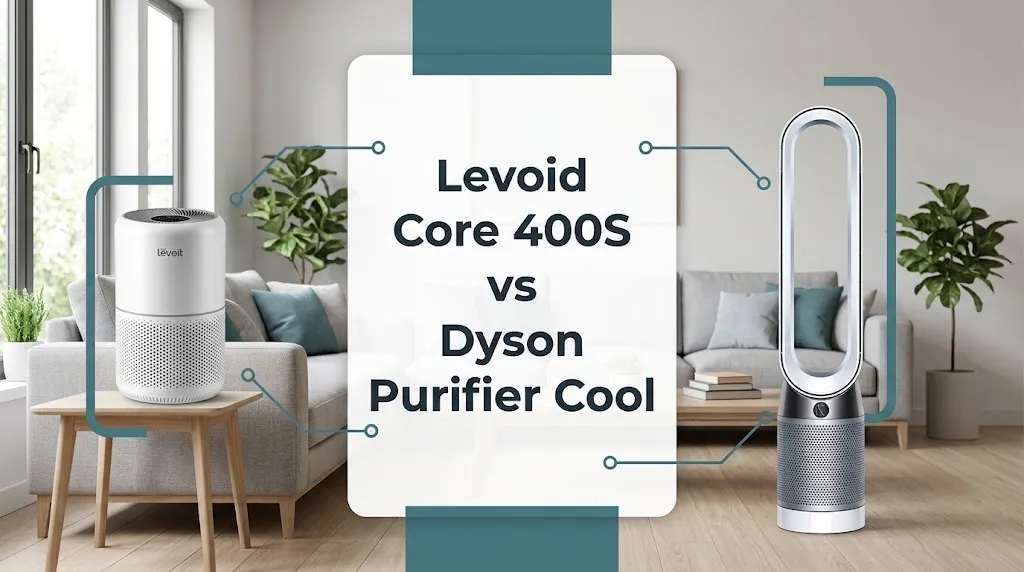
For most shoppers who want to reduce airborne allergens without paying for extra features, the Levoit Core 400S is the more practical starting point. Its published clean air delivery rate (CADR) is 231 cubic feet per minute, and its three-stage filtration system combines particle filtration with activated carbon for odors.
The Dyson Purifier Cool is worth considering if you also want a fan, detailed air-quality information, and a fully sealed HEPA H13 filtration system. However, those features do not automatically mean it will relieve allergy symptoms better than the Levoit in every room. Room size, airflow, filter condition, and how long the unit runs all affect results.
Why the Levoit Core 400S Is a Good Choice for Everyday Allergy Relief
The Levoit Core 400S is designed for people who want a straightforward way to reduce airborne particles in a bedroom, living room, or home office.
Its main advantages include:
- Three-stage filtration: The filter combines a pre-filter, particle filtration, and activated carbon to address airborne particles and some odors.
- Useful room-cleaning capacity: Levoit lists a CADR of 231 CFM and an ideal room size of 358 square feet when operating at the specified higher air-change rate.
- Automatic operation: The built-in air-quality sensor can help adjust fan operation based on detected air conditions.
- App controls: The VeSync app provides remote controls, air-quality updates, and filter-life information.
- Lower purchase cost: The Core 400S is generally less expensive than Dyson’s Purifier Cool models, leaving more room in the budget for replacement filters.
For allergy management, the most useful feature is not the app or the display. It is the ability to move enough air through an effective filter consistently.
A limitation is that the Core 400S’s primary filtration should not automatically be described as a formally certified True HEPA filter. The model is not HEPA-certified, so if certified HEPA filtration is a firm requirement, verify the exact filter and certification claims rather than relying on general marketing language.
What Makes the Dyson Purifier Cool Different?
The Dyson Purifier Cool combines air purification with a tower-style fan. Its design may suit someone who wants cleaner indoor air and additional airflow from one appliance.
Its main advantages include:
- Sealed HEPA H13 filtration: Current models such as the PC1 advertise filtration that captures 99.97% of particles as small as 0.3 microns.
- Air-quality information: Depending on the model, sensors and the display or MyDyson app can report changes in indoor air quality.
- Activated carbon filtration: The carbon layer helps reduce certain gases and odors.
- Fan functionality: Oscillating airflow can make a warm room more comfortable while the purifier operates.
- Remote and app controls: Supported models allow users to change settings and monitor air quality remotely.
The key limitation is cost. You are paying for the combined purifier-and-fan design and its additional features, not simply for allergy filtration.
Also, a fan does not cool a room in the same way an air conditioner does. It circulates air to help people feel cooler.
How Well Do They Handle Different Allergy Triggers?
The right choice depends partly on what causes your symptoms. Neither machine can eliminate every allergen in a home, and airborne filtration does not remove allergens that have already settled on furniture, bedding, or flooring.
| Allergy trigger | Levoit Core 400S | Dyson Purifier Cool |
|---|---|---|
| Pollen | Helps capture airborne pollen | Helps capture airborne pollen |
| Dust | Helps reduce airborne dust | Helps reduce airborne dust |
| Pet dander | Useful for airborne pet allergens | Useful for airborne pet allergens |
| Mold spores | Can capture airborne particles | Can capture airborne particles |
| Dust mites | May capture airborne particles, but not mites or allergens throughout bedding | Same limitation |
| Household odors | Activated carbon helps reduce some odors | Activated carbon helps reduce some odors |
Pollen and Seasonal Allergies
If pollen is your main problem, either purifier may help reduce the amount circulating indoors.
For example, if you notice more symptoms after opening windows during high-pollen days, running a properly sized purifier can help capture some of the pollen that enters the room. Keeping windows closed when outdoor pollen levels are high can also reduce exposure.
The Levoit is a sensible choice if you mainly want particle filtration. The Dyson may be more appealing if you also want cooling airflow during warmer weather.
Pet Dander and Household Dust
Pet dander consists of tiny particles that can remain airborne before settling on carpets, upholstery, and other surfaces. Both purifiers can help capture airborne particles when correctly sized and operated.
Imagine a household with a dog that spends time in the living room. Running an appropriately sized purifier consistently may reduce airborne dander, but vacuuming, cleaning upholstery, and keeping the pet out of the bedroom when needed can also help.
Neither purifier replaces regular cleaning.
Dust Mites and Bedroom Allergies
Dust mites are a special case because many of their allergens are found in bedding, mattresses, and upholstered furniture rather than floating in the air all the time.
A purifier may capture some airborne dust-mite allergen particles, but it cannot clean a mattress or remove allergens already embedded in fabric. Washing bedding regularly and using appropriate allergen-resistant mattress and pillow covers may be more directly helpful for this trigger.
Room Size and Airflow: A Major Buying Factor
A purifier can have excellent filtration and still perform poorly if it is too small for the room.
The Levoit Core 400S has a published CADR of 231 CFM. The U.S. Environmental Protection Agency recommends selecting a clean air delivery rate appropriate for the space being cleaned. For a room with an 8-foot ceiling, its estimates include 195 CFM for 300 square feet and 260 CFM for 400 square feet.
That makes the Core 400S a reasonable candidate for many medium-sized rooms, although the desired air-change rate and room layout matter.
For example:
- A 200-square-foot bedroom: The Levoit has useful capacity for this type of space, provided its airflow is not obstructed.
- A 400-square-foot open living area: Compare the purifier’s CADR with your desired cleaning rate instead of relying only on a manufacturer’s maximum room-size claim.
- A large, open-plan home: One portable purifier may not clean every connected area effectively. Separate units may be more practical.
Dyson’s whole-room purification claims describe how its airflow distributes purified air. They should not be treated as a direct substitute for an independently comparable CADR rating. When comparing the two, look for standardized performance data for the exact models.
Noise, Energy Use, and Filter Replacement
Allergy relief depends partly on whether you can comfortably run the purifier for long periods. A unit that is too loud at its useful fan speed may end up being switched off.
Noise
Levoit lists an operating noise range of 22–52 dB for the Core 400S. The sound level changes with fan speed, and maximum-speed operation will generally be louder than a quiet or sleep setting.
Dyson models also have multiple airflow settings. Noise depends on the exact version and operating speed, so compare the published noise specifications for the specific units you are considering.
For a bedroom, test a low setting before relying on a purifier overnight. Remember that a lower fan speed usually means less air is filtered per hour.
Energy Use
Levoit lists the Core 400S at 38 watts of rated power. Its actual energy use depends on operating settings and usage time.
To estimate electricity costs, multiply power consumption in kilowatts by operating hours and your electricity rate. For example, a 38-watt unit running for 24 hours uses about 0.91 kWh per day at that rated power.
For Dyson, check the precise model’s power specification rather than assuming all Purifier Cool versions use the same amount of electricity.
Replacement Filters
Replacement filters are a recurring expense, so include them in your budget before deciding.
Levoit’s standard Core 400S replacement filter has been listed at around $49.99, although prices can change and other filter variants may cost more. Filter life depends on the model, air conditions, and use.
Dyson replacement-filter pricing also varies by model and seller. Check the correct replacement part and its current price before purchasing the purifier.
A cheaper machine is not automatically cheaper to own if its replacement filters are expensive or difficult to find.
How to Get Better Allergy Results From Either Purifier
Buying the right machine is only part of the process. A few habits can make a meaningful difference in how well it works.
- Choose the correct room size. Measure the room and compare it with the purifier’s CADR and recommended air-change rate.
- Run it consistently. Longer operating time generally allows more air to pass through the filter.
- Keep air intakes and outlets clear. Curtains, furniture, and walls can interfere with airflow.
- Replace filters when required. A dirty or overloaded filter may not perform as intended.
- Reduce the source of allergens. Clean floors and upholstery, manage pet dander, and address damp areas that may support mold.
- Check outdoor conditions. When pollen levels are high, limiting outdoor air entry through open windows may help.
The EPA emphasizes appropriate room sizing, regular filter replacement, and matching the filtration method to the pollutants you want to remove. It also notes that no air cleaner removes every pollutant.
An air purifier can support allergy management, but it is not a treatment for an allergy condition. If symptoms are persistent or severe, a healthcare professional can help identify triggers and discuss suitable treatment.
Frequently Asked Questions
Choosing between the Levoit Core 400S and Dyson Purifier Cool for allergy relief can raise a few questions about filtration, pollen removal, room size, and long-term costs. The answers below will help you understand how these two air purifiers compare and which one may better suit your needs.
Is the Levoit Core 400S better than Dyson for pollen?
Both can capture airborne pollen when correctly sized and operated. The Levoit Core 400S is a practical choice for people who prioritize air cleaning and value, while Dyson may suit people who also want a fan and additional monitoring features.
Can an air purifier completely eliminate allergies?
No. Air purifiers can reduce some airborne allergens, but they cannot remove every allergen from a home or prevent all allergy symptoms. Combining filtration with trigger-specific cleaning and appropriate medical guidance may provide better results.
Is Dyson worth the extra money for allergy relief?
Dyson may be worth the higher cost if you will use its fan function, air-quality monitoring, and sealed HEPA H13 filtration. If your main priority is reducing airborne particles in a suitably sized room, the Levoit Core 400S may offer better value.
Final Verdict
The Levoit Core 400S is the better overall value for most people focused on allergy relief, particularly when the main goal is reducing airborne pollen, dust, and pet dander in a medium-sized room.
Choose the Dyson Purifier Cool if you also want a fan, more detailed air-quality monitoring, and a sealed HEPA H13 filtration system. Its extra features can be useful, but they are not a guarantee of greater allergy relief.
One practical tip before buying: measure the room and compare the purifier’s CADR with your desired cleaning rate. That will help you choose a unit that can clean the air effectively instead of paying extra for features you may not need.