
Dreo Space Heater or Dyson Hot Cool? For quiet heating?

If quiet heating is your main priority, a Dreo space heater is often the better value, while a Dyson Hot+Cool can be a good choice if you also want year-round air circulation and a premium design. The quieter option depends on the specific models, fan speed, and heating mode. Neither brand guarantees silent operation, so compare low-speed noise, heat output, and room size before buying.
How Dreo and Dyson Compare for Quiet Heating
The main difference is how each heater balances noise, comfort, and price. Dreo offers several electric heaters with low-noise settings, while Dyson’s Hot+Cool lineup combines heating with fan-based air circulation. Since both brands sell multiple models, the fairest comparison depends on the exact unit you plan to use.
Dreo Space Heater vs. Dyson Hot+Cool: Side-by-Side Comparison
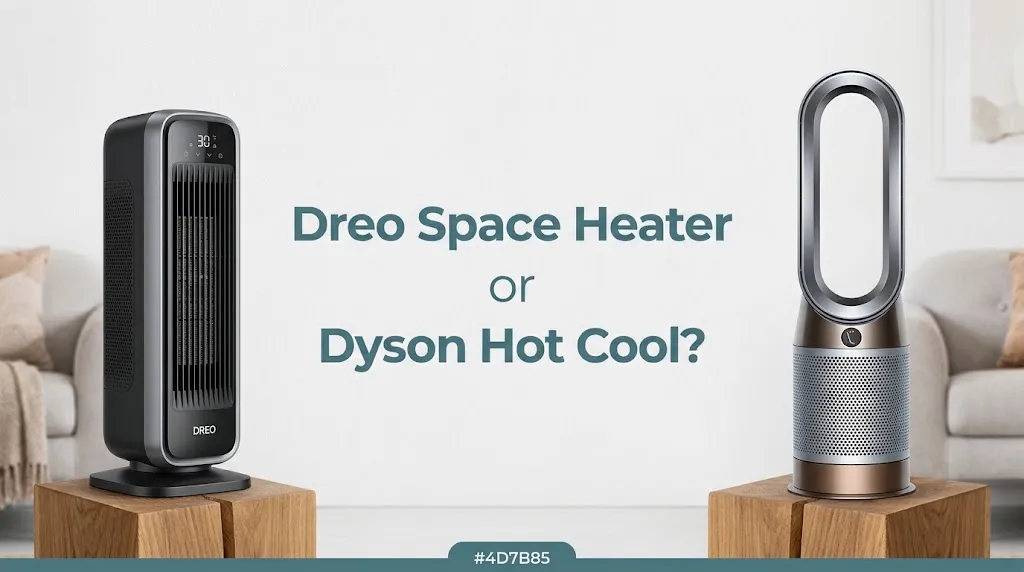
Choosing between the Dreo Space Heater and Dyson Hot+Cool depends on your budget, noise preferences, and heating needs. Dreo focuses on affordable heating solutions with quiet operating modes on select models, while Dyson combines heating with fan functionality in a premium design. Here’s how they compare across the features that matter most for quiet heating.
| Feature | Dreo Space Heater | Dyson Hot+Cool |
|---|---|---|
| Best For | Affordable, quiet heating | Premium heating and air circulation |
| Noise Level | Low-noise settings available on select models | Quiet Mode available on select models |
| Heating Performance | Depends on the model and room size | Depends on the model and room size |
| Fan Function | Varies by model | Heating and fan functions |
| Temperature Control | Thermostat and controls vary by model | Temperature and airflow controls vary by model |
| Design | Compact, tower, and other styles | Premium bladeless design on applicable models |
| Price | Generally more budget-friendly | Generally more expensive |
| Best Value | Buyers who mainly need affordable heating | Buyers who want heating and fan functions in one appliance |
| Available |  | |
Which One Sounds Quieter in a Bedroom?
A Dreo model with a dedicated low-noise setting can be a sensible choice for a bedroom. Once the room reaches a comfortable temperature, a thermostat may allow the heater to reduce its output or cycle off, depending on the model and settings.
The Dyson Hot+Cool HF1 is another option for a bedroom, particularly if you value its specified Quiet Mode. Dyson lists that mode at 26 dBA, although the sound you hear will depend on placement, room acoustics, and the selected settings.
For a light sleeper, both could be suitable. However, if even a gentle fan bothers you, neither forced-air design is guaranteed to be comfortable. A fanless electric radiator may be worth considering because it produces heat without a blower.
Heating Performance: Quietness Is Only Part of the Decision
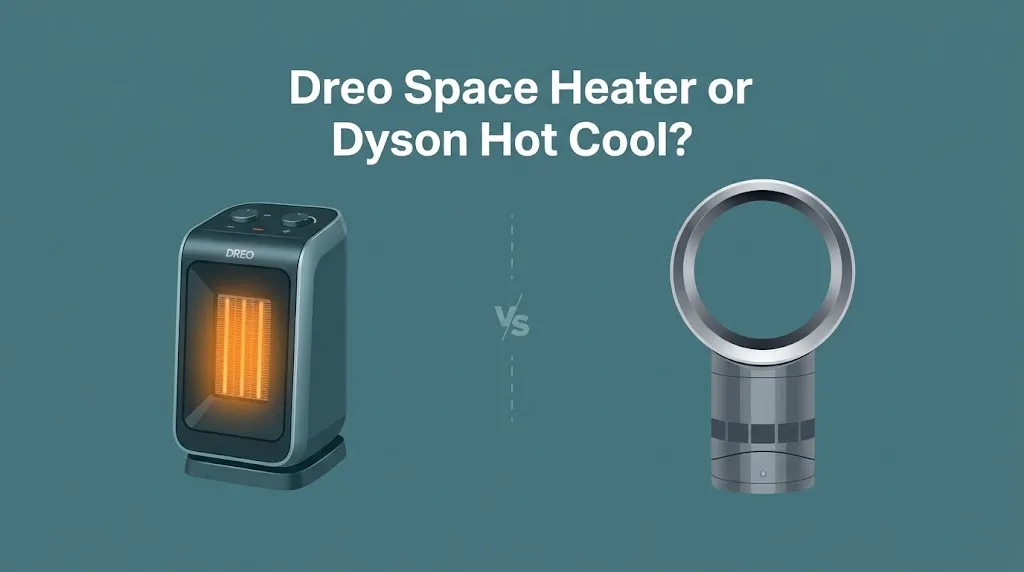
A heater can be quiet but still struggle to make a cold room comfortable. You need to consider room size, heat output, airflow, and how well the thermostat maintains your preferred temperature.
Both Dreo and Dyson offer models rated at up to 1,500 watts for heating in the US. At full power, a 1,500-watt electric resistance heater converts its electrical input into heat indoors, but how quickly the room warms depends on insulation, drafts, ceiling height, and outdoor temperature.
Which Heater Is Better for a Small Room?
For a bedroom, home office, or small living room, either brand may work well if the model suits the space.
Consider these two examples:
- A small home office: Imagine you’re working at a desk and need steady warmth without a distracting fan. A Dreo heater with a low airflow setting may provide the comfort you need at a lower purchase price.
- A living room used year-round: If you want winter heating and a fan for circulating air during warmer months, the Dyson Hot+Cool may offer more value from a single appliance.
The key is to match the heater to the room rather than assume that a more expensive model will heat every space better.
Price and Value: Is Dyson Worth the Extra Money?
Price is one of the biggest differences between these brands. Dreo has a broad selection of heaters, including budget-friendly compact models and more advanced whole-room designs. Dyson focuses on premium products that combine heating with air circulation and additional convenience features.
Dreo offers some heaters below $100, while premium Dyson Hot+Cool models can cost several hundred dollars. Actual prices vary by model, retailer, and promotion, so check the current price of the exact heater you’re considering.
| Buying consideration | Dreo | Dyson Hot+Cool |
|---|---|---|
| Initial cost | Generally more budget-friendly | Premium price |
| Quiet heating | Several models offer low-noise settings | HF1 has a specified Quiet Mode |
| Summer use | Depends on the model; some include fan mode | Heating and fan functions in one unit |
| Design | Compact, tower, and other styles | Distinctive bladeless design on applicable models |
| Best value | Buyers focused on affordable heating | Buyers who want combined heating and cooling functions |
Will a More Expensive Heater Save Electricity?
Not automatically. Both brands sell electric heaters, and models with a maximum heating input of 1,500 watts use about 1.5 kilowatt-hours of electricity per hour when operating continuously at full power.
For example, at an electricity rate of $0.17 per kWh, a 1,500-watt heater running at full power for four hours would cost approximately $1.02.
The actual cost depends on your electricity rate, thermostat setting, room conditions, and how often the heater switches off. A thermostat can reduce energy use by limiting unnecessary heating, but it does not make electricity free.
If you’re choosing between the two brands mainly for quiet heating, paying more for Dyson may not be necessary. Dreo could meet your needs without the premium price.
Features That Matter When Noise Is Your Priority
Low-Speed Operation and Thermostat Control
The lowest fan setting is often the most important feature for someone sensitive to noise. However, some rooms need stronger airflow to warm up, so consider whether the heater remains comfortable to listen to at medium or high settings.
A thermostat is also useful because it can maintain a target temperature without requiring you to leave the heater at maximum output continuously.
Oscillation and Airflow
Oscillation helps distribute warm air across a wider area. It can make a room feel more evenly heated, although the movement mechanism itself may produce some sound on certain models.
If you place a heater beside your desk, you may prefer a model that directs warm air toward you without needing to oscillate. For a shared living room, wider air distribution may matter more.
Timers and Remote Controls
A remote control lets you adjust the temperature or fan setting without getting up. A timer can help manage operation, but it should not be treated as permission to leave a portable heater running while you sleep.
Check the features of the specific Dreo or Dyson model. Not every heater from either brand includes the same controls or modes.
Is a Quiet Space Heater Safe to Use Overnight?
A quiet heater is not automatically a safe heater to leave running unattended. The US Consumer Product Safety Commission recommends keeping portable heaters at least three feet from bedding, curtains, furniture, and other combustible materials. It also advises plugging electric heaters directly into a wall outlet and turning them off when sleeping.
Before buying either brand, check for appropriate safety certification, tip-over protection, overheat protection, and clear operating instructions.
For safer everyday use:
- Place the heater on a stable, level surface.
- Keep it away from blankets, curtains, and furniture.
- Never cover the heater or block its air intake.
- Plug it directly into a wall outlet, not an extension cord or power strip.
- Turn it off before going to sleep or leaving the room unattended.
If nighttime noise is your main concern, consider warming the room before bedtime and turning the portable heater off before sleeping.
Which Should You Choose for Quiet Heating?
The right choice depends on whether you value affordable quiet heating or a premium appliance with multiple functions.
Choose Dreo for Budget-Friendly Quiet Heating
Dreo is the stronger starting point if you mainly want a heater for a bedroom, office, or small living space. Look for a model with a documented low-noise setting, a thermostat, and suitable heat output.
Choose Dyson Hot+Cool for Year-Round Convenience
Dyson is worth considering if you want heating and fan functions in one premium appliance. The HF1’s published Quiet Mode specification is useful, but its higher price makes the most sense when you will use its additional features.
My recommendation is to start with Dreo if quiet heating is your only priority. Consider Dyson if you also want its design, air circulation, and convenience features. Before deciding, compare the exact models at the lowest setting you expect to use and check independent noise measurements where available.
Frequently Asked Questions
Here are some frequently asked questions about the Dreo Space Heater vs. Dyson Hot+Cool comparison to help you decide which heater offers quieter operation, better value, and the right features for your home.
Is Dreo Quieter Than Dyson Hot+Cool?
Some Dreo models advertise very low noise levels at their lowest airflow settings, while the Dyson Hot+Cool HF1 is rated at 26 dBA in Quiet Mode. These figures use different testing conditions, so they do not establish a universal winner. The specific model and fan speed matter more than the brand name.
Which Is Better for Quiet Heating While Working From Home?
A Dreo heater with a low airflow setting is a sensible choice if you want affordable warmth while working. Dyson may be worth the extra cost if you also want a fan for warmer weather. Compare noise at the actual heating setting you plan to use, not just the lowest advertised figure.
Is Dyson Hot+Cool Worth the Price Over Dreo?
Dyson may be worth the premium if you value its combined heating and fan functions, design, and controls. If you only need quiet electric heating, Dreo is likely to offer better value because its lineup includes less expensive options.
Final Verdict
When comparing the Dreo Space Heater vs. Dyson Hot+Cool for quiet heating, Dreo is the better choice for most budget-conscious buyers, while Dyson is worth considering if you want a premium appliance that provides both heating and fan functions. Both can offer comfortable warmth, but noise levels vary by model and fan speed.
Before making your decision, compare the noise ratings, thermostat controls, and heating performance of the exact models. If quiet heating is your main priority, focus on real-world noise at low and medium settings rather than paying extra for features you may not need.